The Benefits of an Initial Public Offering
Marc Deschenaux is the founder and managing partner of Deschenaux & Partners LLP. Throughout an illustrious career, he has been involved in 169 IPO’s and more than 240 private offerings.

















 Marc René Deschenaux
Marc Deschenaux is the founder and managing partner of Deschenaux & Partners LLP. Throughout an illustrious career, he has been involved in 169 IPO’s and more than 240 private offerings.
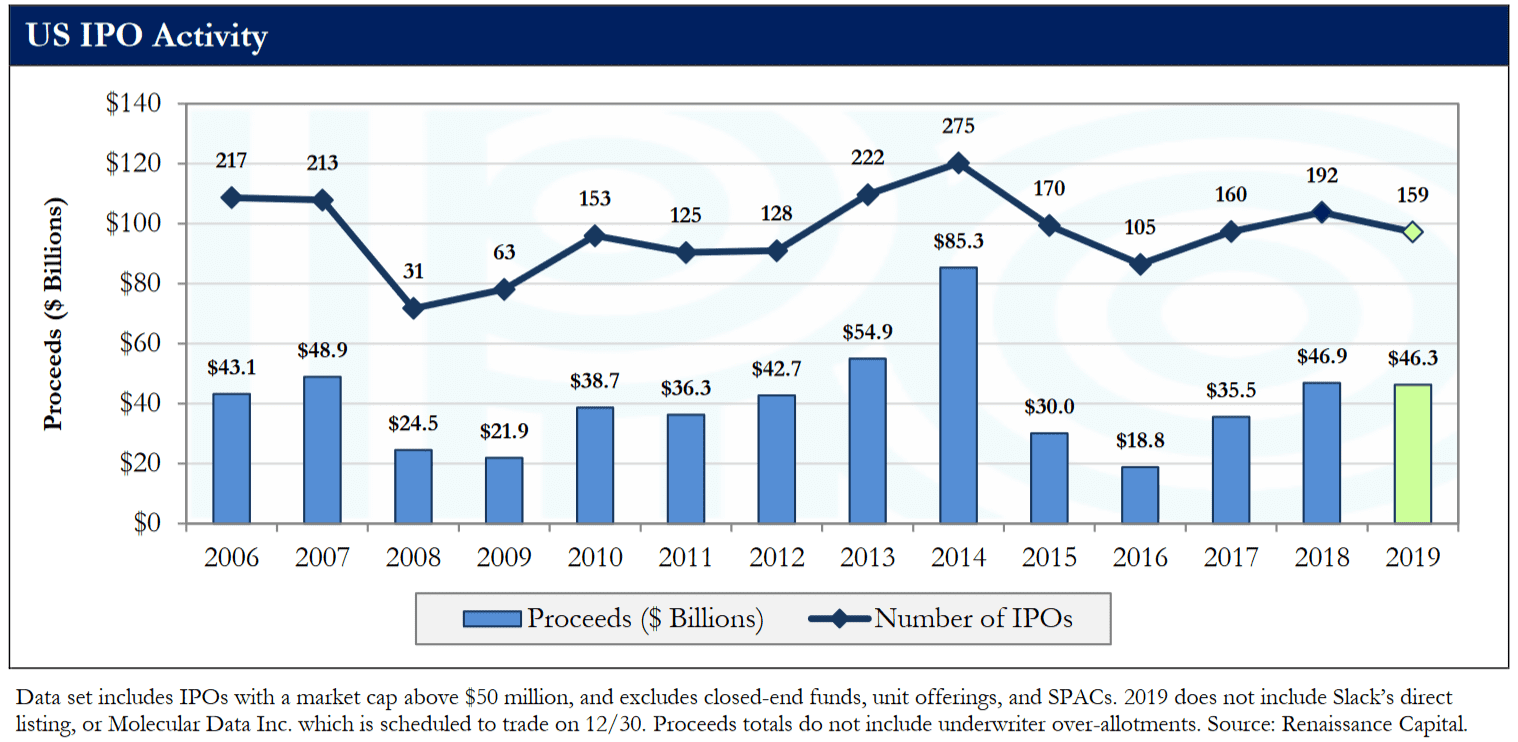
The long-awaited debuts of mega unicorns Uber and Lyft were mega busts, capped off by WeWork’s kamikaze IPO attempt in September. But beyond these headline-grabbing disappointments, the IPO market had a mostly good year. Returns averaged 20%, with 159 IPOs raising $46 billion in proceeds. Biotechs remained the single most active sector, followed closely by … Read more

SHARES OF STOCK ISSUES I. GENERAL RULES AND CLASSIC FINANCING METHODS An entrepreneur or a company is looking to raise capital to undertake a project. When Greenberg, Hornblower, Deschenaux & Partners helps to incorporate, restructure, or protect a company, it transforms it into a “Reporting Issuer”, “Issuing Company” or “Issuer”, that is to say, a … Read more
IPO Allotment is a process where the “registrar to the offer” with the help of a lottery system finalize the process of allocating the IPO shares to the individual who have applied for IPO subscription. It a simple process of lottery where the owners of the shares are decided. IPO allotment process takes place within … Read more
It is often difficult to raise the budget of a large venture such as a merger, an acquisition, a securities private placement or an initial public offering (IPO). In addition to significant cost, it monopolizes a significant portion of the company’s resources and the management’s attention. That is why it is not uncommon that during the venture capitalization (e.g. IPO) process, the performance of the company is heavily impacted. Hence, there may be an additional need for funding, if only to offset the poor sales performance due to the effort of the venture capitalization or IPO process.
The main barriers preventing an initial public offering (IPO) to happen for a company which is ready, willing and able to pursue it include the following: the preparation cost of an IPO is prohibitive; there is no guarantee that the IPO will succeed; and bankers and other professionals putting their career at stake will not authorize the IPO without proper due diligence ensuring financial securities markets’ safety, validation of the business model; sufficient revenue making the company at least cash-flow positive and if not profitable; strong and stable growth.
Previously, methods of raising investment capital included the funding rounds method. Each time a securities issue was needed, a fixed price for each share of the security was determined according to the current state and valuation of the company for which the security was issued and was offered to investors. With a single fixed price, if the company was mismanaged or could not achieve its initial objectives or was simply running out of money, the fixed price would need to be lowered to attract new investors. New investors could buy shares of stock at a lower price than the earlier investors, while new investors still have less risk than the earlier investors.
Traditionally, investors have been able to invest capital in collective ventures such as corporations by buying shares of the entire company. For example, someone interested in investing in the movie industry was able to buy shares in large corporations that produced movies, such as Sony or Disney. However, these large corporations have other ventures outside of movies that may not be of interest to individual investors. In some instances, an investor may wish to invest in a more targeted manner.
The main barriers preventing an initial public offering (IPO) to happen for a company which is ready, willing and able to pursue it include the following: the preparation cost of an IPO is prohibitive; there is no guarantee that the IPO will succeed; and bankers and other professionals putting their career at stake will not authorize the IPO without proper due diligence ensuring financial securities markets’ safety, validation of the business model; sufficient revenue making the company at least cash-flow positive and if not profitable; strong and stable growth.

A pass-through security is backed by one or more income generating assets. A servicing intermediary collects the monthly payments from the issuer/s and, after deducting a fee, remits or passes them through